Serving Kendall, FL and surrounding areas. (645) 300-7598
Advanced Kendall Deck & Fence has built custom decks, covered patios, screen enclosures, and fencing for Miami homeowners since 2018 - every project designed for the specific conditions of Miami's concrete block neighborhoods, permitted through the City of Miami, and built to HVHZ wind standards. We respond to every inquiry within one business day.
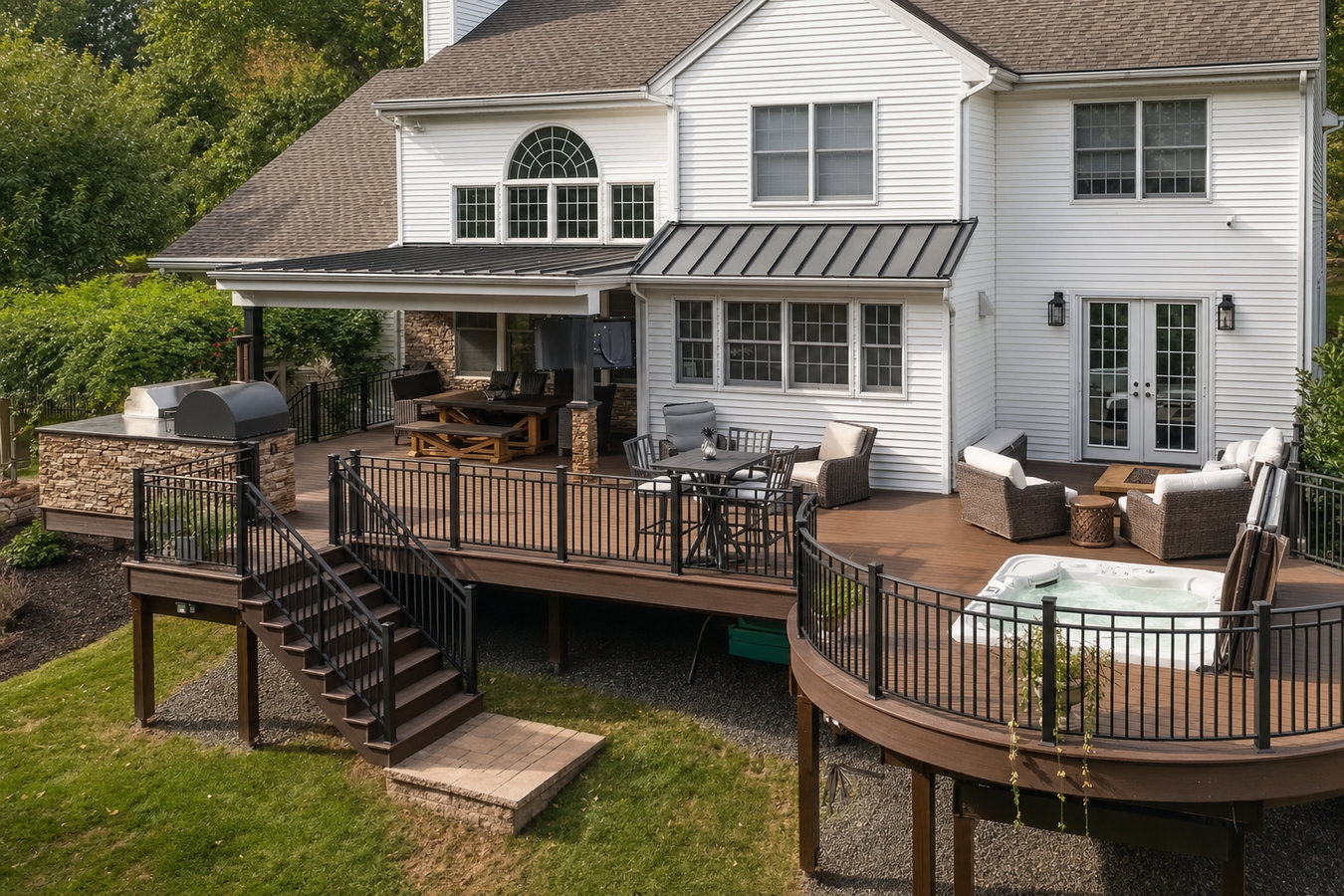
Miami's residential neighborhoods range from the tight blocks of Little Havana and Flagami to the larger lots in Coconut Grove and Coral Terrace - no two properties have exactly the same footprint, setbacks, or outdoor living needs. Our custom deck design and build service starts with your specific yard and works forward, creating a deck that fits your space and meets Miami's HVHZ permit requirements rather than a generic plan that may not suit your property.
Miami's combination of year-round humidity and intense UV exposure breaks down untreated wood decking faster than most homeowners expect - a pressure- treated deck that would last 20 years in a cooler climate may show significant deterioration in 8 to 10 years here. Capped composite decking resists moisture, mold, and fading without annual staining, making it the most practical long-term investment for Miami homeowners who want outdoor living space they can actually rely on.
Miami gets over 62 inches of rain per year, with most of it falling as sudden, heavy afternoon storms from May through October. An uncovered patio is unusable during these storms and for hours afterward on many days. A properly permitted covered patio - built with aluminum or metal panel roofing rated for Miami-Dade wind loads - extends usable outdoor hours across all twelve months and protects furniture and surfaces from the daily sun and rain cycle.
Mosquitoes are a persistent reality for Miami homeowners throughout the wet season, and standing water from summer storms creates breeding conditions in yards across the city. Screen enclosures are one of the most effective ways to reclaim outdoor space for daily use, and they add real livable area to properties where interior square footage is often limited by the dense residential lots typical of Miami's established neighborhoods.
Miami's residential neighborhoods are dense, with homes on small to medium lots positioned close to neighbors and to the street. Privacy fencing is among the most-requested projects we handle in the city, and material choice matters here - vinyl holds up in Miami's humidity and salt air without rusting, warping, or needing repainting, while quality wood fence boards treated for moisture resistance provide a natural look with the right level of upkeep.
Miami homeowners in Coconut Grove, Coral Terrace, and the broader residential neighborhoods often have pools that are central to outdoor living for much of the year. Pool decks here take constant sun exposure, chlorine splash, and heavy foot traffic through all twelve months - not just a summer season. We build pool decks with slip-resistant surfaces that stay comfortable underfoot in the intense Miami heat and do not crack or discolor from UV or chemical exposure.
Miami is Florida's second-largest city with roughly 440,000 residents, and the housing stock reflects more than a century of growth, with the bulk of single-family homes built between the 1950s and 1980s using concrete block construction. These CBS homes are durable, but they were designed in an era when outdoor living platforms were not a standard feature of residential construction. Adding a deck, pergola, or covered patio to an older Miami home requires working with masonry anchoring, tight lot lines, and the City of Miami Building Department's permitting process - which is separate from unincorporated Miami-Dade County and has its own inspection schedule. A contractor who knows this process can keep your project moving; one who does not will cause costly delays.
Miami's climate is among the most demanding in the continental United States for outdoor building materials. The city averages over 248 sunny days per year, and the combination of daily UV exposure, year-round humidity above 70 percent, and proximity to the coast produces salt air conditions that corrode unprotected metal fasteners and degrade untreated wood much faster than in inland Florida cities. Hurricane season from June through November adds the requirement that every structural connection - footings, posts, beams, and railing attachments - meet Miami-Dade's HVHZ wind rating standards. These are not optional extras; they are what make the difference between a structure that survives a named storm and one that does not.
Our crew works throughout Miami regularly, and we understand the local conditions that affect deck and outdoor structure work here. We pull permits through the City of Miami Building Department on a regular basis and know what documentation the city requires for HVHZ structural reviews. That familiarity keeps projects on schedule and avoids the permit rejections that happen when a contractor submits incomplete drawings or uses details that don't match the current Florida Building Code as adopted in Miami-Dade.
Miami's residential neighborhoods vary considerably from one to the next. Little Havana and Flagami have smaller, older CBS homes on tight lots where staging and access are limited - our crews are used to working efficiently in those conditions. Coconut Grove and Coral Terrace have more mature lots with larger yards and in some cases historic structures that require careful attention to setbacks and HOA rules. The neighborhoods along SW 8th Street and out toward Coral Way are familiar territory for us - we have worked on homes throughout these areas and know the common construction patterns and what to expect from site to site.
We also serve the neighboring community of Fountainebleau, where the housing stock is similar to Miami's older residential blocks, and Coral Gables, where Mediterranean Revival architecture and strict city aesthetics create a different kind of project entirely. If your home is in Miami and you have questions about what a project would involve on your specific property, we will give you a straight answer.
Call or use our contact form and we will get back to you within one business day. We schedule the site visit at a time that works around your day - you do not need to clear your schedule to be present.
We visit your Miami property, measure the space, and discuss your options. The estimate we leave with you is written and itemized - materials, labor, and permit fees are listed separately so the total is clear and there are no hidden charges at the end.
We submit the permit application to the City of Miami Building Department and track its progress. City permit approvals typically take two to six weeks, and we notify you as soon as the permit clears so construction can be scheduled promptly.
Most Miami deck projects take five to ten business days to complete once construction begins. We walk through the finished work with you before closing out the permit so you can confirm every detail matches what was agreed before we leave the site.
We serve Miami and the surrounding Miami-Dade communities. Free estimates, permitted work, one business day response guaranteed.
(645) 300-7598Miami is Florida's second-largest city, with approximately 440,000 residents within city limits and a metro area that extends across Miami-Dade, Broward, and Palm Beach counties to more than six million people. The city is a dense mix of neighborhoods, each with its own character and housing type. Little Havana is a dense, low-rise residential and commercial area rooted in the Cuban-American community that has defined this part of the city for decades. Coconut Grove has older tree-lined streets and a historic district with homes dating to the early 1900s. Flagami and Allapattah are working-class residential neighborhoods with small concrete block homes similar in age and construction to those found across unincorporated Miami-Dade. The City of Miami sits at the southeastern end of the Florida peninsula, bordered by Biscayne Bay to the east and surrounded by unincorporated Miami-Dade communities on the north and west.
The residential core of Miami - the neighborhoods where single-family homeowners are most concentrated - sits in the western and southern portions of the city, from Little Havana and Coral Way out through Coral Terrace. These areas are characterized by concrete block homes built between the 1950s and 1980s, modest lot sizes, and mature trees and landscaping built up over generations. Neighboring Coral Gables borders Miami to the southwest with a different architectural character and strict city codes, while Westchester in unincorporated Miami-Dade sits just west, sharing much of Miami's residential DNA. We serve homeowners throughout all of these areas and understand how the local permit offices, building stock, and climate conditions differ from one neighborhood to the next.
Get a one-of-a-kind deck designed and built to fit your home perfectly.
Learn MoreLow-maintenance composite decking that stays beautiful for decades.
Learn MorePremium Trex decking installed for lasting durability and curb appeal.
Learn MoreSolid pressure-treated wood decks built to handle Florida weather.
Learn MoreNatural cedar decks with rich color and excellent weather resistance.
Learn MoreRestore a damaged deck or replace it entirely with quality craftsmanship.
Learn MoreProfessional staining and sealing to protect and refresh your deck.
Learn MoreClassic wood privacy fences installed for security and curb appeal.
Learn MoreEnjoy outdoor living without bugs with a professionally screened enclosure.
Learn MoreStay shaded and dry with a custom covered deck or patio cover.
Learn MoreBeautiful pergolas that add structure and style to your outdoor space.
Learn MoreMulti-level deck designs that maximize your yard and add visual interest.
Learn MoreWe serve Miami homeowners with permitted, HVHZ-rated outdoor construction. Call now or submit a request online - we respond within one business day.